

Explore the history of the B29 Crash site, a historic reminder of the airmen who tragically lost their lives in service to their country.
This remarkable hike offers stunning views over Manchester and reveals haunting yet captivating remnants of the mangled wreckage.
So, lace up your boots and get ready as we cover everything you need to know before your visit!
🗺️ Getting to The B29 Bomber Crash Site
The crash site near Higher Shelf Stones is located just outside Manchester, within the Peak District, and a short distance from Glossop.
For this hike, we’ll begin at the Snake Pass summit, which is accessible only by car.
If you need to use public transport, consider starting your walk from Glossop or Torside, though this will result in a longer route.
🚘 Parking at Snake Pass Summit
Parking is primarily available along the summit of Snake Pass Road (A57). However, spaces can be limited on busy days, so be sure to arrive early.
Snake Pass Road Side (Free)
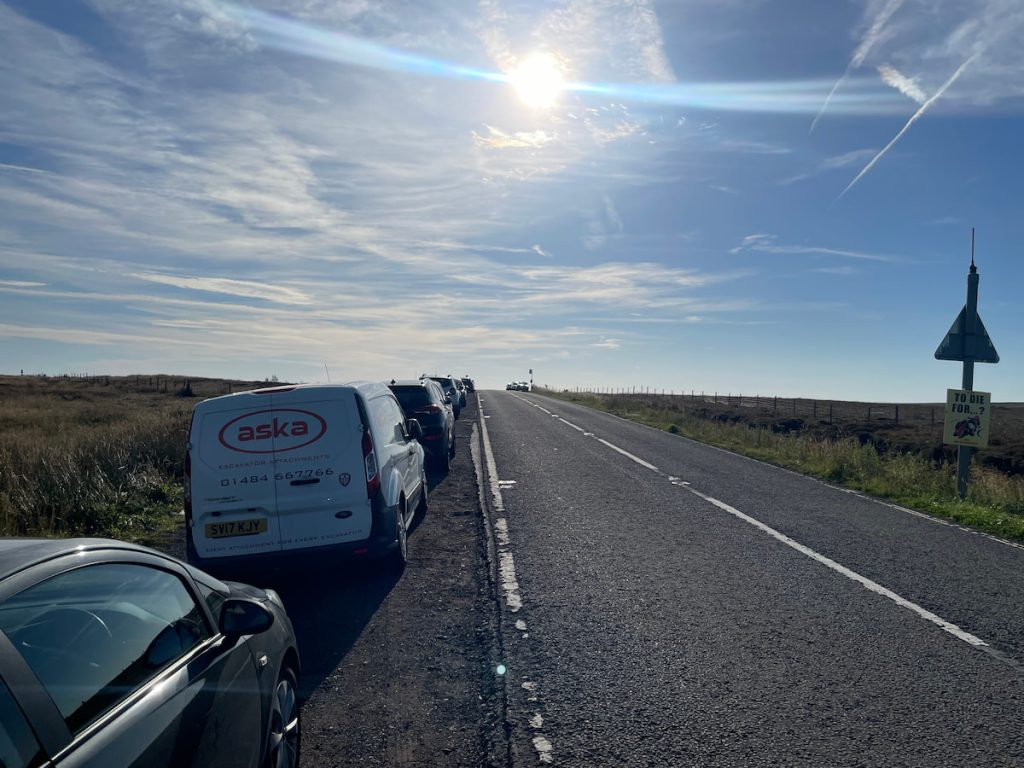
- Address: Snake Pass Summit, Pennine Way, Sheffield SK13 7PQ( What3Words – ///starters.spilling.pythons)
- Cost: Free
If the main parking is full, there are a few additional spots further down the road at ///remains.defrost.caged, though availability is limited.
Be careful not to park behind the double yellow lines, as it’s common for cars to receive tickets in this area.
📍B29 Crash Site Walking Map & Route
🟡 Medium | 🚶♂️ 6.5 km (4 mi) | ⛰️ Total ascent: 219 m (142 ft) | ⏱️ 1.5-3 Hrs
Download file for GPSStart from Snake Road, following the Pennine Way before veering off the main path and heading towards the Higher Shelf Stones trig point, which offers stunning views over Manchester. A short distance away is the main B29 “Overexposed” crash site wreckage. From there, you can return to the Pennine Way and follow it back to the main road.


Which hiking map app should I use? I recommend OS Maps Online for its unparalleled accuracy. However, if you’re a beginner, you might find AllTrails to be more user-friendly. For a detailed review of the best UK map apps, read my full review.
Too short? If you want a slightly longer route, consider extending the walk by coming from Glossop or Torside.
B29 Crash Site Walk Step by Step – 6.5km (4mi) ~ 1.5-3 hrs
1. Head down the path from Snake Road, which is part of the famous Limestone Way, and go through the gate.

2. A short distance along the path, turn left onto the “Doctors Gate” footpath.
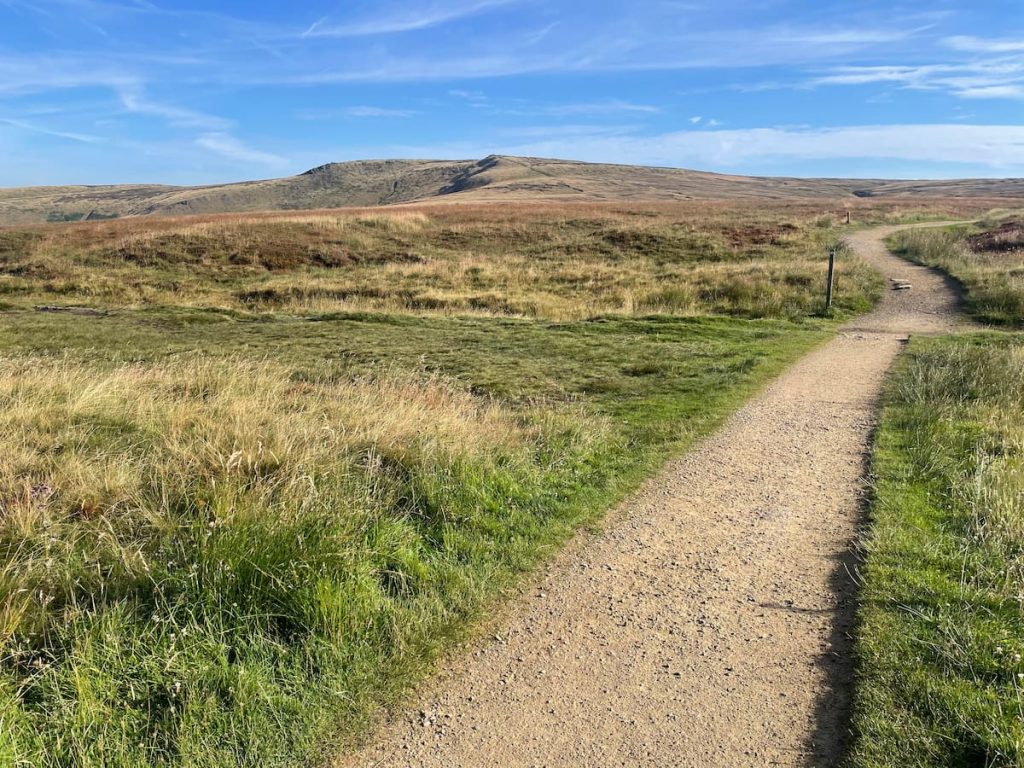
Note: The trail can become boggy from this point on. If the weather is particularly bad, consider doing this walk counterclockwise, sticking to the Pennine Way as much as possible, and returning the same way.
3. When you reach a sharp bend in the path, take a right and follow the side of the valley towards the waterfall.
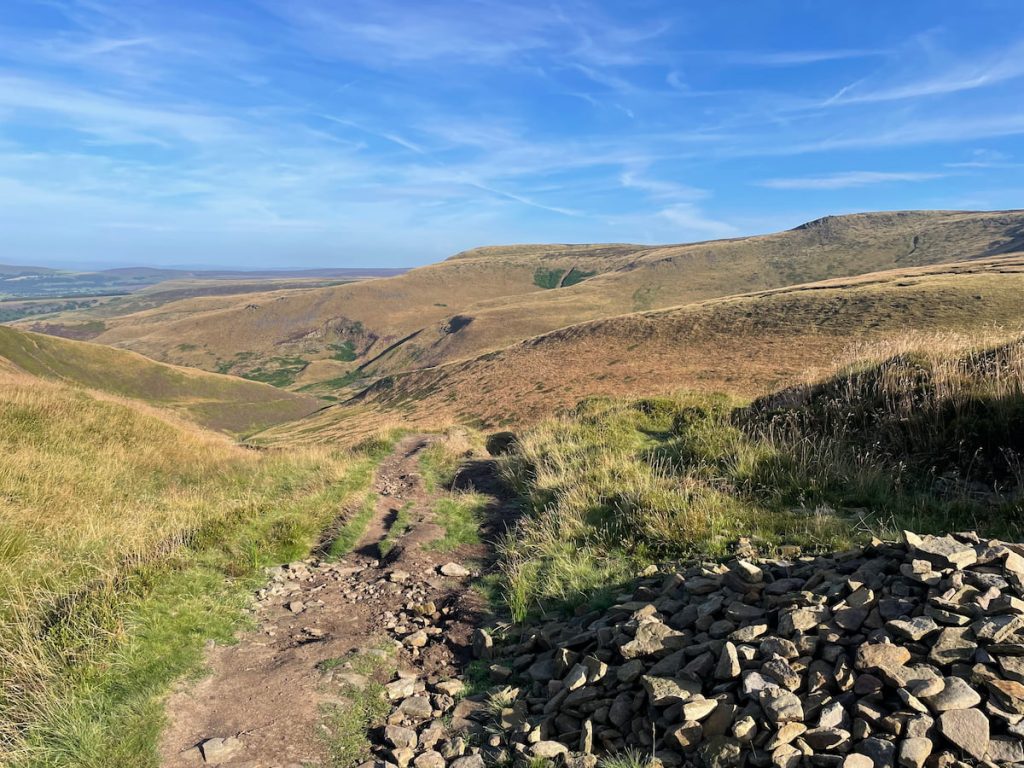
4. At the ford, turn left, cross over the stream, and head uphill towards the Higher Shelf Stones trig point. Don’t worry—this is the steepest part!
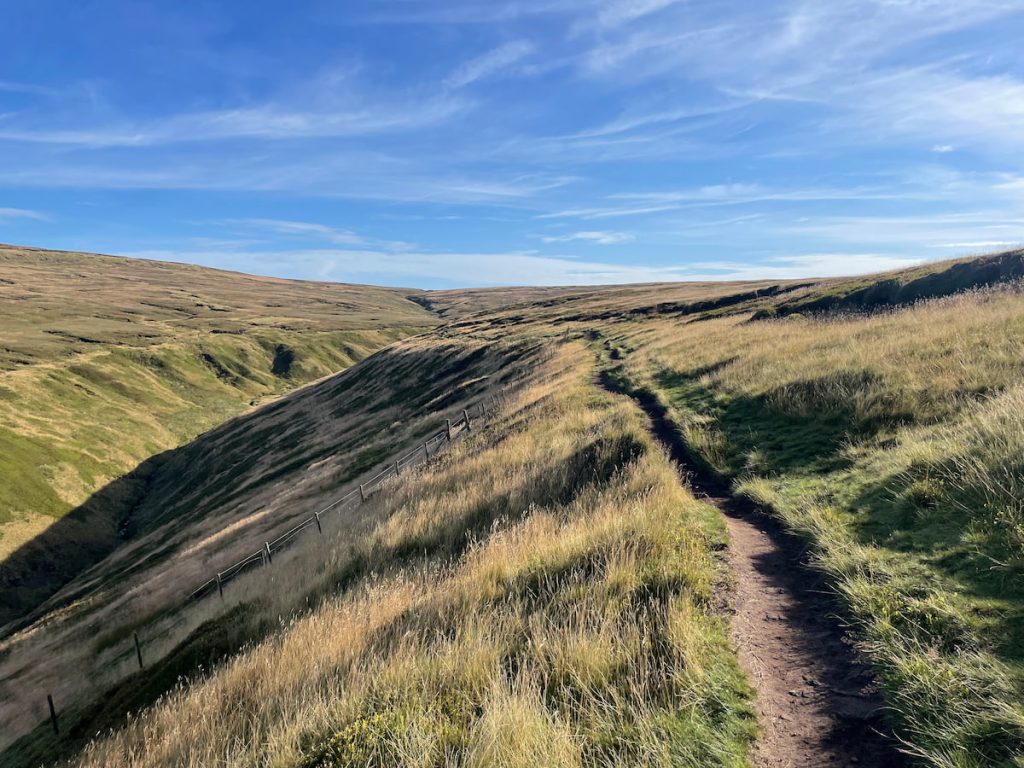
Note: I recommend using a GPS alongside your paper map here, as it’s easy to get lost. There are many paths in the open moorland, and sheep tracks can be misleading, so stay attentive.
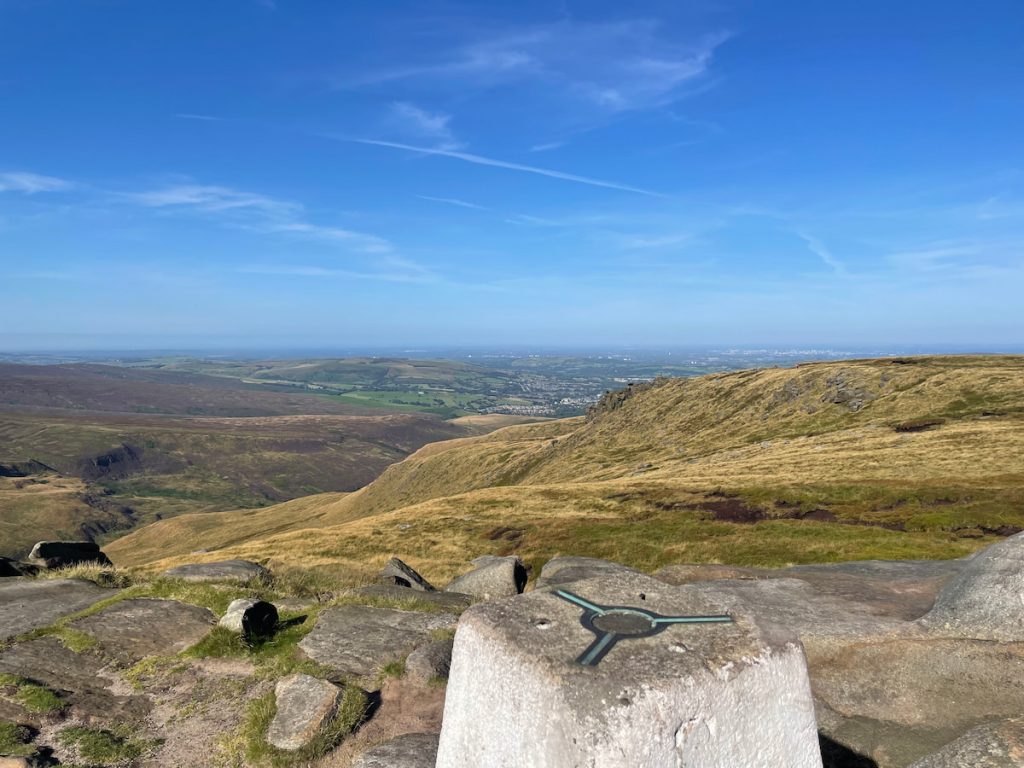
5. You are now at the trig point of Higher Shelf Stones. On a clear day, this spot offers the best views of the area, including a panoramic view over Manchester.
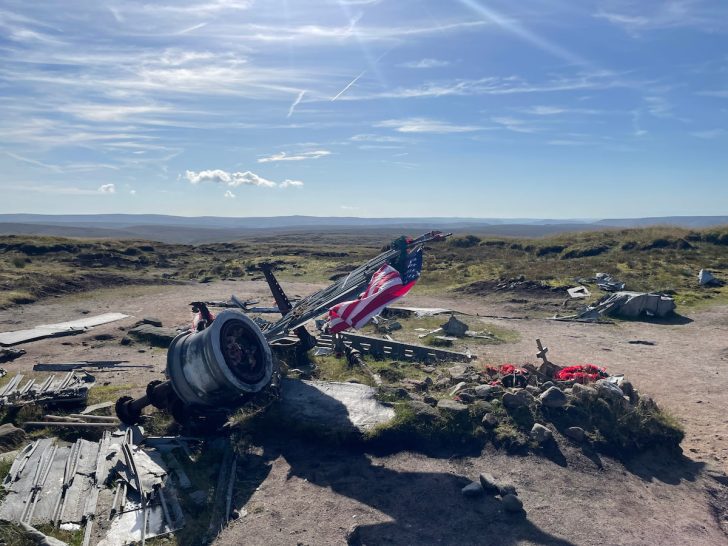
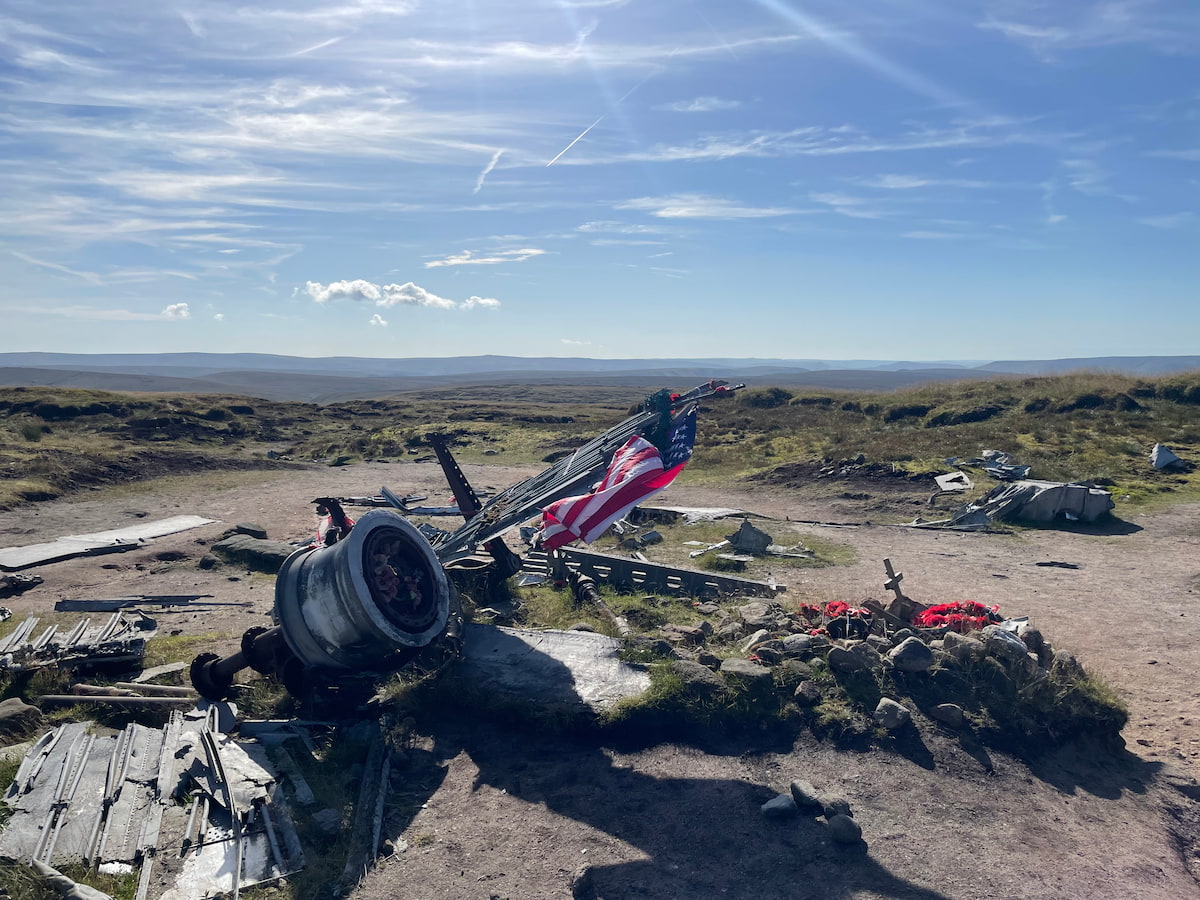
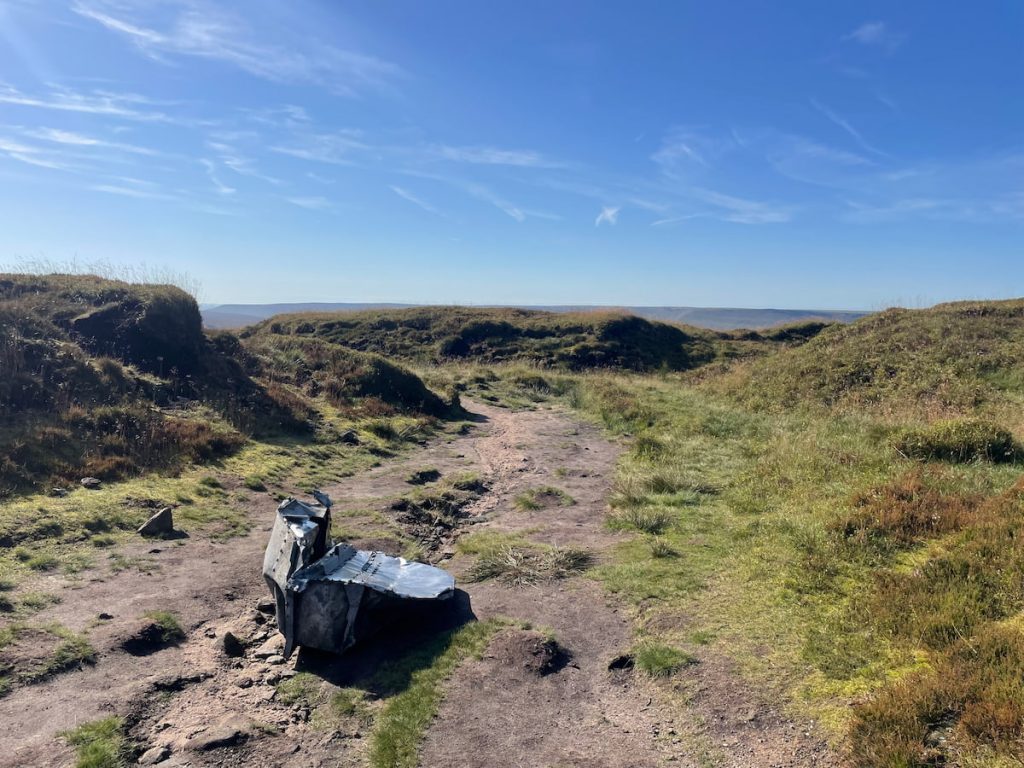
6. Continue from the far side, and after a short distance, you’ll reach the main crash site. When I last visited, an American flag and poppies placed by visitors were nestled among the wreckage, which includes parts of the aircraft such as the Duplex-Cyclone engines, wing sections, fuselage sections, undercarriage, and gun turrets.
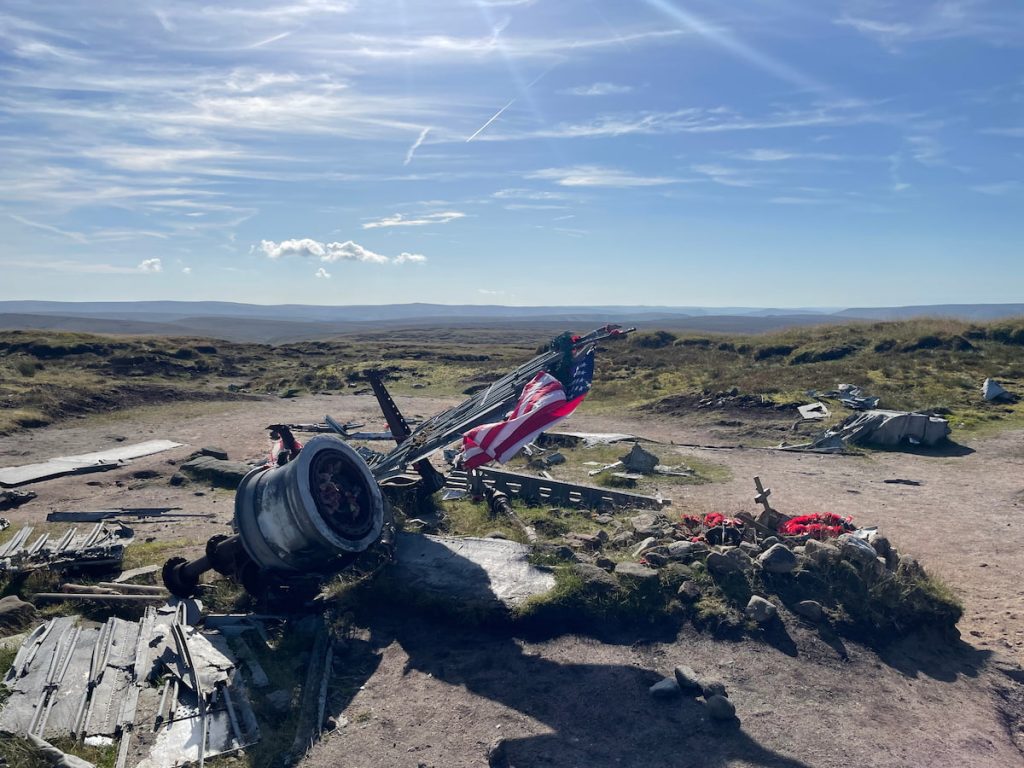
Note: It should go without saying, but please do not attempt to take souvenirs or move parts of the wreckage. Many visitors come here to pay their respects at the memorial.
This is an undisturbed crash site, so be aware that much of the metal has sharp edges that could cause injury.
7. Continue following the path, passing various plane parts along the way, until you rejoin the Pennine Way at “Hern Clough.”
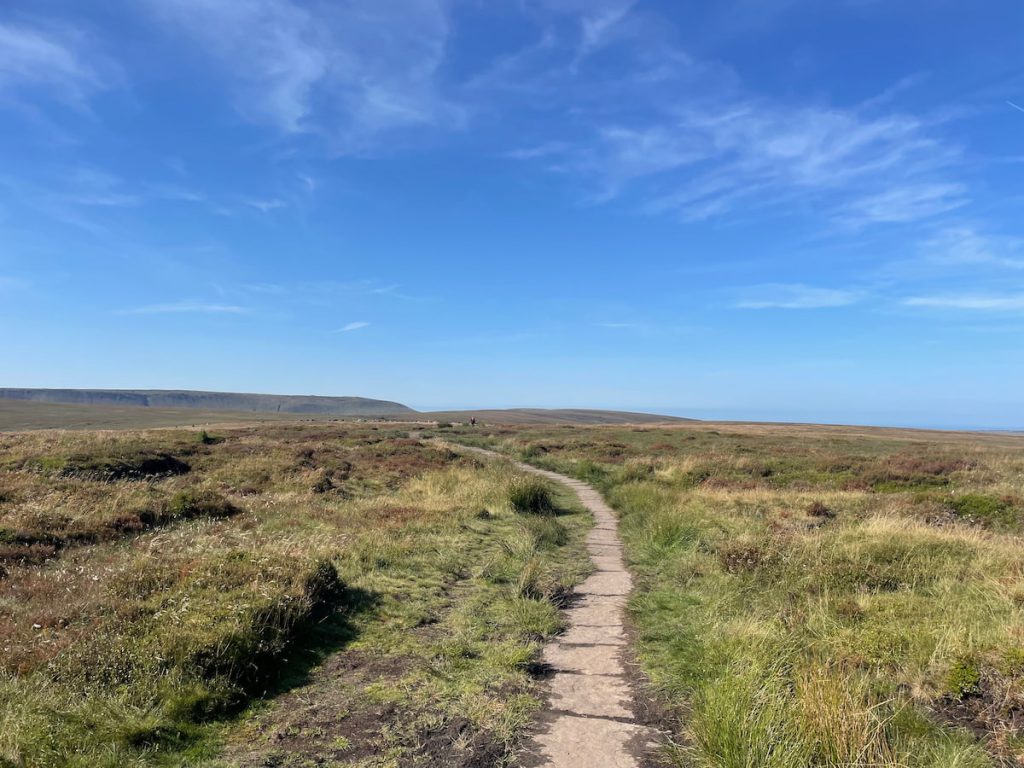
8. Follow the Pennine Way all the way back to the main road via Devil’s Dyke, where you started the walk.
- Daypack: Choose a 10-20L daypack to carry all your gear comfortably.
- Clothing: Wear layered, moisture-wicking clothing and pack a waterproof jacket and waterproof trousers for changing weather.
- Footwear: Sturdy walking boots or trail shoes are essential for the varied terrain.
- Water & Snacks: Carry enough water (at least 1L per hour) and bring energy-rich snacks.
- Navigation: Always have a map and compass, and optionally, bring a reliable GPS app to stay on track.
- First Aid Kit: Include essential items like blister treatments and painkillers. A compact First Aid Kit is ideal.
- Emergency Items: A headtorch, whistle, and multi-tool can be vital in unforeseen situations.
Please note some of these links may earn us a commission from qualified purchases at no additional cost to you, which helps fund the free content we provide.
B29 Crash Site Amenities & Facilities
There are no amenities near the bomber crash site, so be sure to bring everything you need with you and take it back with you, leaving no trace.
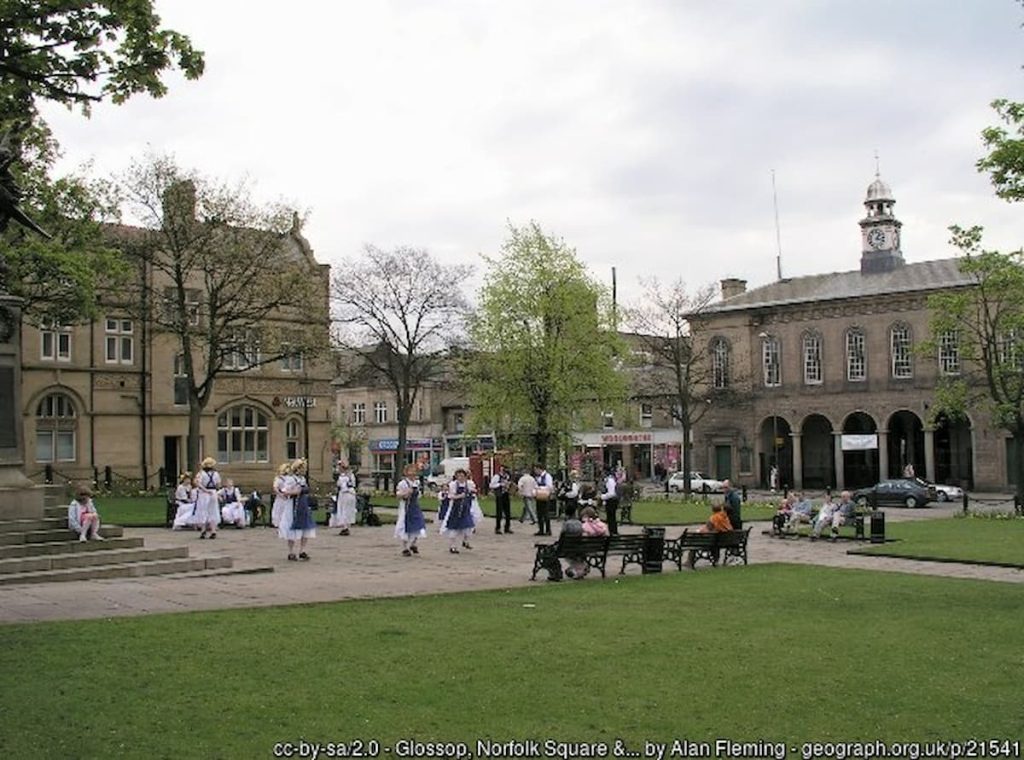
The closest town is Glossop, just a 7-minute drive away, located just outside the Peak District National Park. It offers plenty of pubs, local cafes, and a Tesco Extra for all your other needs.
Here are some popular options in the town:
- The Globe: A legendary pub is known for its vegan food, home-brewed beers, and music venue.
- Glossop Cafeteria: This great, affordable cafe is known for its hearty English breakfasts.
- Napoli Restaurant: Popular authentic A La Carte Italian Restaurant
- Canella: An artisan coffee house serving great coffee, cakes, and the occasional alcoholic beverages.
🏰 B29 Superfortress Over Exposed History & Significance of the Area
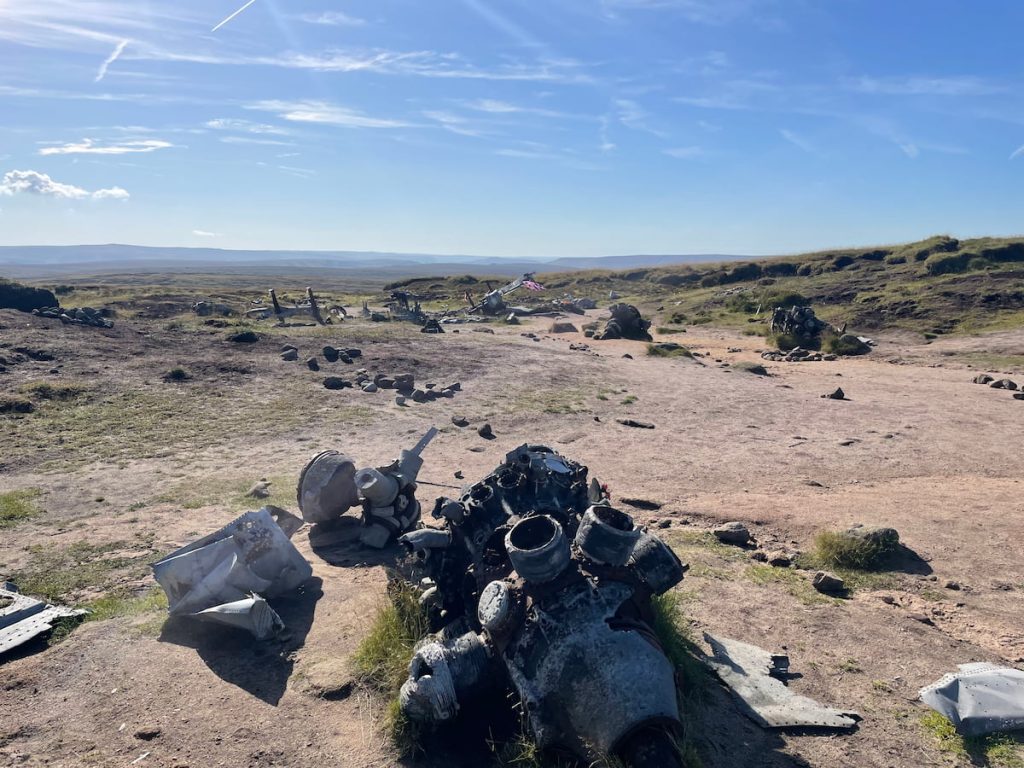
The B-29 Superfortress, named “Over Exposed,” met its tragic end on November 3, 1948, on the moorlands of Bleaklow near Higher Shelf Stones, in the Peak District. This aircraft, a modified reconnaissance version of the iconic bomber, was part of the 16th Photographic Reconnaissance Squadron, flying under the Strategic Air Command of the USAF.
Originally built in Renton, Washington, it had served during World War II and participated in atomic bomb testing at Bikini Atoll.
On the day of the crash, the aircraft was en route from RAF Scampton in Lincolnshire to the US Air Force base at Burtonwood, carrying a crew of 13 and a $7,400 payroll. Flying in poor visibility due to low clouds, the crew mistakenly believed they had crossed the hills and began descending.
Unfortunately, they were still seven minutes short of clearing the high ground, resulting in a collision with the rugged terrain of Bleaklow. The crash instantly claimed the lives of all on board.
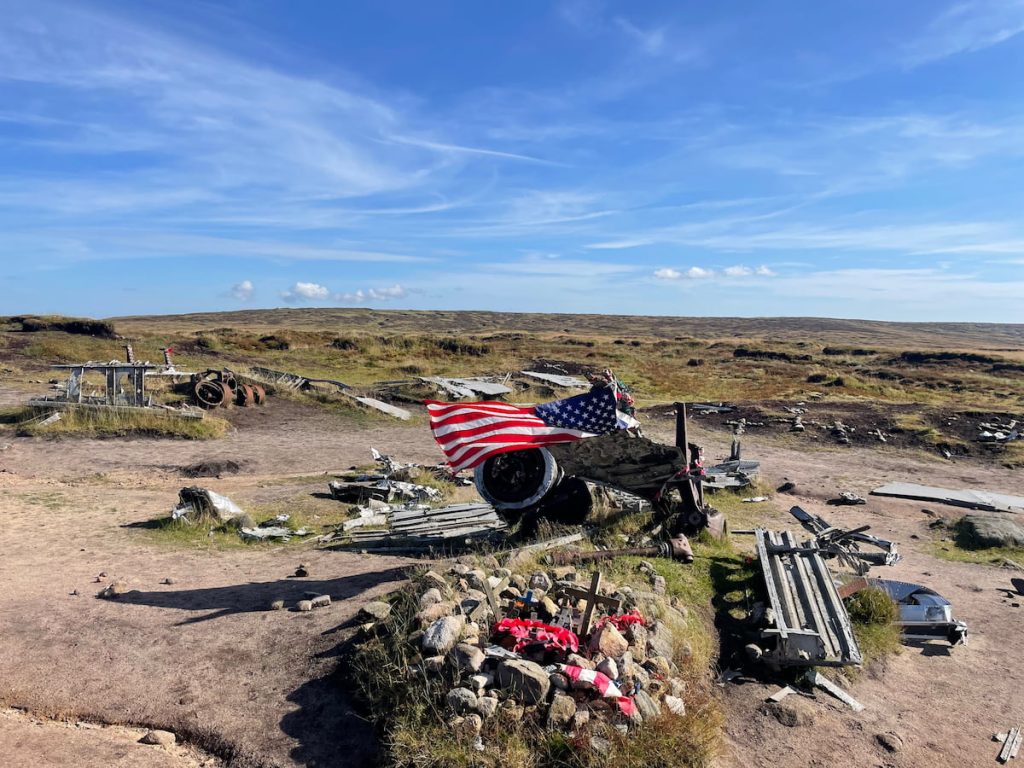
The site of the crash is now marked by a memorial, and the wreckage remains scattered across the moor, serving as a poignant reminder of the dangers faced by aircrews during that era. The site, difficult to access and navigate, attracts visitors who pay their respects to the fallen crew and reflect on the historical significance of the area.
The remains of the aircraft and the story behind it continue to draw interest, symbolizing the enduring legacy of those who served during a transformative period in military aviation history.
Other Nearby Crash sites
The Bleaklow moors have seen several tragic military aircraft crashes over the years. Below is a summary of these incidents:
30 January 1939: Bristol Blenheim Mk.I L1476
- Crew: Pilot Stanley John Daly Robinson and Passenger Jack Elliott Thomas (Both Killed)
- Location: Sykes Moor, Bleaklow
- Incident: The aircraft nose-dived during a training flight from RAF Church Fenton, resulting in the deaths of both crew members. The crash site was discovered two weeks later by a walker. A memorial was erected in 1991.
29 August 1941: Boulton Paul Defiant Mk.I N3378
- Crew: Pilot James Craig and Passenger George Daniel Hempstead (Both Killed)
- Location: Bleaklow Stones, Bleaklow
- Incident: The aircraft crashed at cruising speed in low cloud while returning from RAF Turnhouse to RAF Hibaldstow. The wreckage was found by shepherds nearly a month later after a search by ten aircraft failed to locate it.
10 December 1941: Blackburn Botha Mk.I W5103
- Crew: Pilot Thomas William Rogers (Killed)
- Location: Round Hill, Bleaklow
- Incident: The aircraft crashed during a flight from Blackburn Aircraft’s factory to Harwarden. The pilot descended through low cloud before clearing the hills, leading to the crash.
5 December 1956: De Havilland Canada L-20A Beaver 52-6145
- Crew: Pilot John Rossman Tinklepaugh, Passenger Guy Waller (Both Killed)
- Location: Bramah Edge, Bleaklow
- Incident: The aircraft crashed during a flight from RAF Sculthorpe to RAF Burtonwood due to an air traffic control error that mistakenly directed the plane into the hillside.
These incidents highlight the treacherous nature of the Bleaklow moors, particularly in poor weather conditions, and serve as solemn reminders of the challenges faced by aircrews during these periods.
🧐 B29 Crash Site – FAQs
How many people died at the B29 plane crash site?
13 people.
What is the grid reference for the B29 crash site?
The grid reference is SK 09061 94878.
Best time to visit the B29 bomber crash site?
Aim to visit during dry weather, as the moorland can be wet and boggy.
Conditions can change quickly, and bad weather combined with inadequate preparation has led to several mountain rescue callouts.